
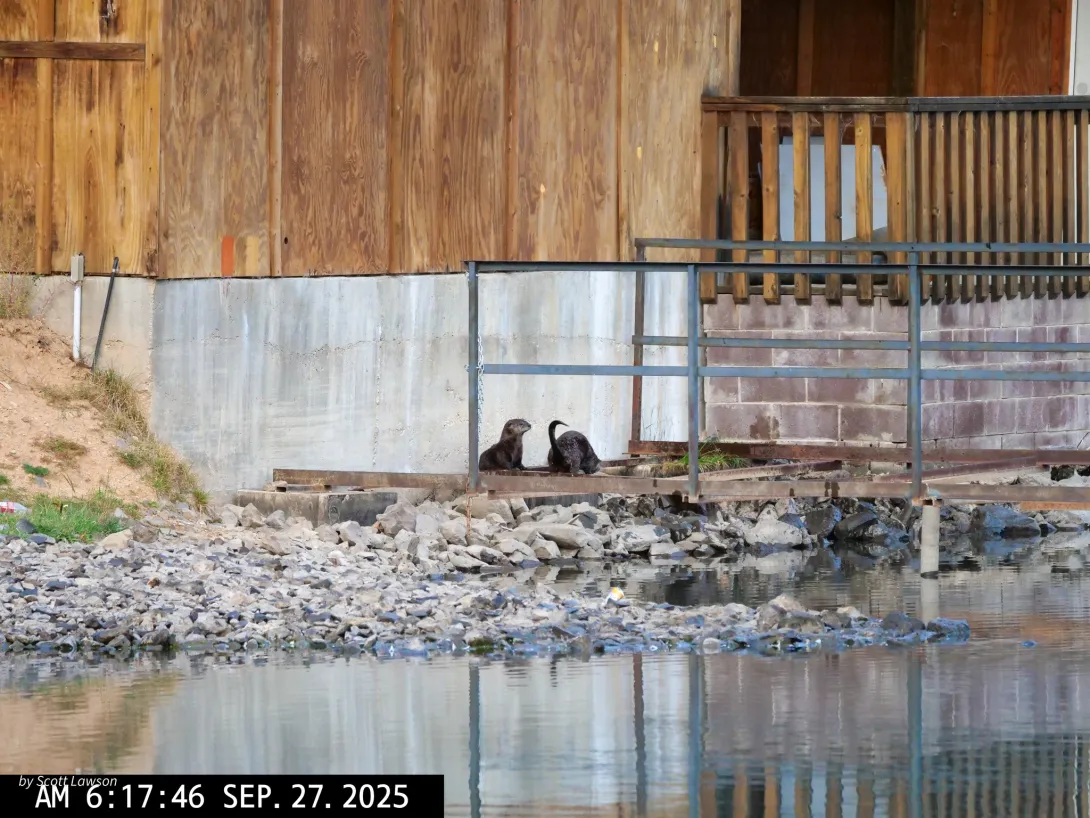
"I love the sight of North American River Otters in the morning."
I saw these playful critters at Red River City Ponds early this morning. Here is some information I found regarding their reintroduction into the Upper Rio Grande ecosystem:
 Background and Reintroduction Efforts
- Extirpation: River otters were native to New Mexico’s waterways—including the Rio Grande, Gila River, and Canadian River—but were wiped out by the 1950s due to overtrapping and habitat loss.
- Initial Reintroduction (2008–2010): A coalition called New Mexico Friends of River Otters led the charge to bring them back. 33 otters were released into the Upper Rio Grande, primarily sourced from Washington state.
- Genetic Boost (2021): To improve genetic diversity, nine additional otters were flown in from Louisiana with help from Light Hawk Conservation Flying and the Louisiana Department of Wildlife and Fisheries.
 Where They’re Thriving
- Otters now inhabit stretches from Cochiti Lake to the Colorado border, and sightings have expanded to places like Red River, Taos, Angel Fire, Pilar, Corrales, and even Eagle Nest Lake—where one was caught on a security camera bounding through snow.
- Their presence near the Cimarron River and possibly the Canadian River suggests they’re dispersing across their historic range, even into high-elevation habitats.
 Ecological Impact
- River otters are top predators in aquatic ecosystems. They help regulate prey populations like crayfish and fish, contributing to healthier waterways.
- Their playful behavior and social nature make them a charismatic symbol of conservation success.
 Monitoring and Citizen Science
- Groups like Amigos Bravos have been using trail cameras and public workshops to monitor otter populations since 2016.
- Citizens are encouraged to report sightings using observation sheets or by contacting local conservation groups.
If you’re ever exploring northern New Mexico’s rivers and lakes, keep an eye out—you might just spot one of these sleek swimmers reclaiming their ancestral waters.